Walk through a farmers market in July and you'll hear it: "wild blackberries" announced over a pint of what are plainly black raspberries. The two fruits look alike in a bowl, grow in the same hedgerows, and taste like cousins. But they are different plants with different habits, different harvest dates, and different demands on your garden. One structural detail separates them for good — and once you know it, you'll never mix them up again.
Pick a ripe berry and turn it over. A black raspberry pulls free of the plant cleanly and comes away hollow, like a thimble, leaving a small white core behind on the stem. That hollow center is why old-timers call them blackcaps. A blackberry, by contrast, holds onto that core. The pale plug stays inside the fruit, which is why a blackberry looks solid when you tip it toward you.
You can confirm it with the pick itself. Ripe black raspberries practically fall into your hand with no pull at all. Blackberries need a gentle tug and often bring a bit of stem or a torn edge with them. Both tests work on fully ripe fruit; on underripe fruit, texture alone can fool you.
The hollow-versus-solid test is worth committing to memory, because the two fruits are sold side by side and labeled interchangeably. A pint of hollow blackcaps at a roadside stand commands more than the blackberries beside it, and the seller may not know the difference — or may not care to correct you. Five seconds of inspection at the stall is cheaper than a disappointing batch of jam.
Look at the plant before you ever reach for a berry.
Black raspberry canes are long, arching, and covered in a powdery blue-purple bloom that rubs off on your fingers. The thorns are small, hooked, and numerous — the kind that snag a sleeve and hold it. Left alone, the tips of those canes bend to the ground and root, which is how a patch quietly walks across a garden. Black raspberries fruit on canes that grew the previous year.
Blackberry canes are usually thicker and either stiffly upright or trailing along the ground, and the thorns on most varieties are stout enough to demand leather gloves. Thornless types exist — 'Navaho' and 'Triple Crown' are two common ones — and they grow the same way otherwise. Blackberry canes don't root at the tips.
That tip-rooting habit is not a trivial detail. A single black raspberry planted at the corner of a bed can become a ten-foot thicket in three seasons, and the new plants appear exactly where you don't want them: between the tomatoes, under the fence, in the middle of the lawn. Blackberries spread too, but by suckers from the crown and roots, so the patch widens in a slow ring rather than wandering off on its own.
Leaves are similar on both: compound, with three to five serrated leaflets. The underside of black raspberry foliage often looks paler and silvery, though that isn't a reliable enough clue to bet on alone.
Black raspberries are small, seedy, and almost perfumed — a winey, floral flavor that deepens when cooked. They aren't especially juicy, which makes them excellent in jam, sauces, ice cream, and infusions. Their shelf life is short; they mold within a day or two if crowded, which is why you rarely see them in supermarkets.
Blackberries are larger and juicier, with a brighter balance of sugar and tartness and a firmer bite. They hold their shape better in pies, cobblers, and muffins, and they freeze well when spread on a tray first. Eaten out of hand, a good blackberry is more refreshing; a good black raspberry is more memorable.
A practical note for jam makers: black raspberries set quickly and give a deep garnet color, while blackberries need a little more pectin and time to thicken. If you're substituting one for the other in a recipe, expect to adjust the sugar and cooking time rather than swapping them one-for-one.
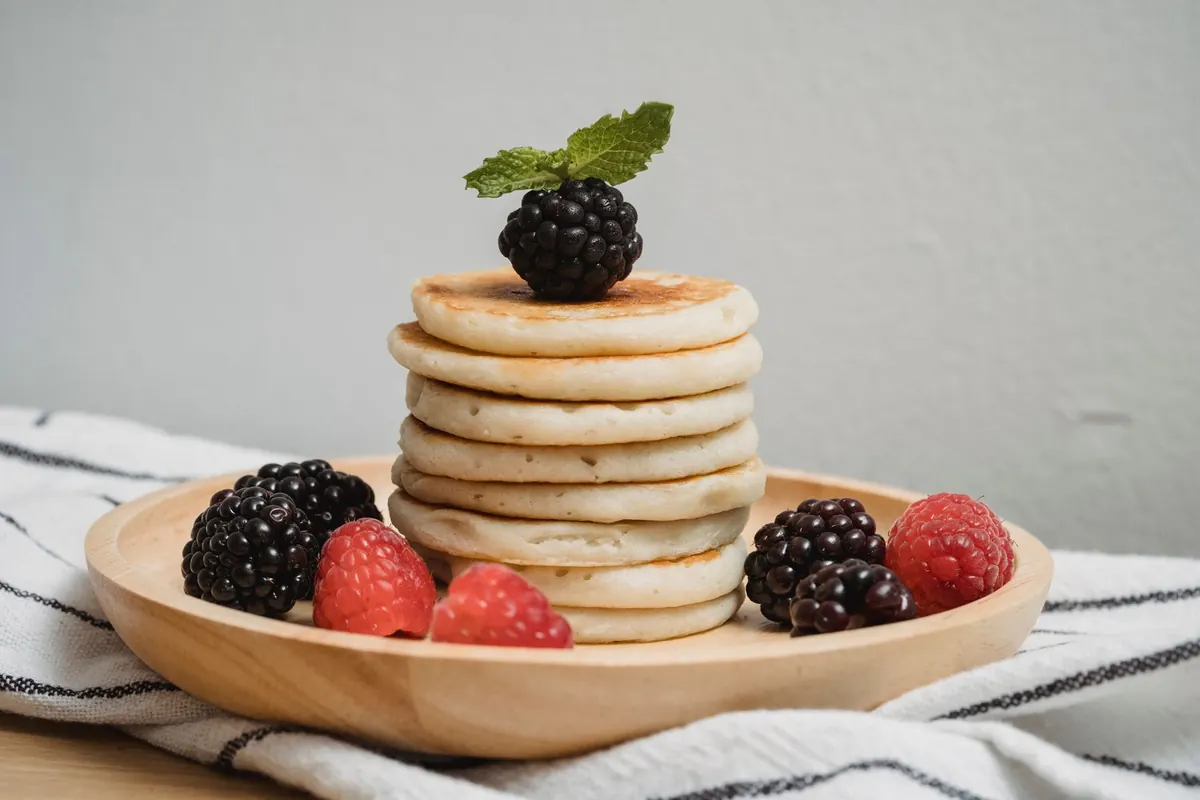
Purple raspberries are the cross between the two — bigger than black raspberries, softer in flavor, and worth trying if you can't decide.
Both fruits turn from red to black as they ripen, and in both cases shiny black means not yet. Wait for dull, matte black.
Check the patch every two or three days during the season, in the cool of the morning if you can. Carry shallow containers — a deep bucket crushes the bottom layer — and refrigerate without washing. Rinse only right before you use them. In warm regions the black raspberry window may start in late May, while northern growers might not pick until early July; the sequence stays the same even when the calendar shifts.
Both are brambles and want broadly the same conditions, with a few important differences.
Brambles bear on canes, not on wood that lives forever, and the rule for both fruits is the same: cut out the canes that already fruited, because they will never bear again.
After harvest, cut every spent cane to the ground. In late winter, thin the remaining young canes to about four or five per plant and tip them back to roughly three feet. That tipping is what turns a handful of berries into a real crop — a tipped cane branches, and every branch carries fruit.
Erect types get the same treatment but want their new canes shortened to about four feet in summer to keep them standing. Trailing types are trained onto a trellis, with fruiting canes laid in one direction and new canes in another, then the spent ones removed after harvest. Skip pruning entirely and you won't lose everything — you'll just get smaller berries, more disease, and a tangle that makes picking miserable. Two or three hours a year is the price.
Both fruits share the same short list of problems.
Raspberries are also more prone to viruses, which is one reason certified disease-free plants from a nursery are worth a few extra dollars over a neighbor's dug-up suckers.
None of this makes brambles hard to grow — it just means the label matters. Plant the right one for your space, prune it like a bramble instead of a shrub, and pick in the cool of the morning. The hollow berry in your hand will tell you which plant you're standing in front of, every time.
Photo: Nicola Barts / Pexels